Monday, 12 December 2022

INTERNATIONAL RESEARCH AWARDS ON INTERNET OF THINGS AND APPLICATIONS

                                     INTERNET OF THINGS AND APPLICATIONS


                        The emergence and rise of the Internet of Things (IoT) promises to revolutionize the way humans lead their lives by connecting all the devices that we possibly use to a common network, the Internet. Some of these devices include sensors, home appliances, health monitoring devices, and any device that produces quantifiable data. This concept has given birth to unlimited application areas that use the interactions between humans and devices to build inferences and make predictions for improving the quality of life and optimizing the use of existing resources. 

A recent survey of McKinsey has shown that the number of deployed IoT devices is expected to reach one trillion by 2025. Moreover, the economic impact of this technology on the world economy can be assessed from the fact that it is expected to capture 11% of the same by the end of 2025. 

With that said, Internet of Things, as a technological paradigm, suffers from several challenges that must be addressed before its vision can be realized. Some of the evident challenges include identification and development of architectures that can meet the scalability requirements of the IoT ecosystem. Data and resource management along with the need to maintain the security and privacy of the system also remain prevalent, in addition to several others. 

All the devices that fall under the umbrella of the Internet of Things are commonly referred to as smart devices. Therefore, the concept of IoT acquires and integrates data from these smart devices. Furthermore, this data is stored and processed to generate useful analytics. The vision of IoT is to visualize the world as a collection of connected entities. The most obvious application of such a paradigm is smart city as the connected nature of the city is expected to make resource management simpler. Among other applications of IoT, healthcare and infrastructure management are frontrunners because of their need for real-time solutions in critical scenarios. In addition, there are a plethora of applications that can be developed and commercialized for human use.

 The objective of this book is to explore the concepts and applications related to the Internet of Things with the vision to identify and address existing challenges. Besides this, it shall also provide future research directions in this domain. This book is meant for students, practitioners, industry professionals, researchers, and vi faculty working in the field of Internet of Things and its integration with other technologies to develop integrated, comprehensive solutions to real-life problems. Part I introduces the basic concept of the Internet of Things and provide an insight into other parts of the book and what they are expected to cover. In order to implement Internet of Things solutions, the architecture must support the specific requirements of such applications.

 These requirements include scalability, transition from closed platforms to open platforms, and designing of protocols for interaction at different levels. This part also covers the architectural issues and available solutions related to IoT. Once the architectural issues are discussed and elaborated upon, the next part is expected to cover the solutions available in this domain for elemental IoT processes like data and device management. The heart of the IoT ecosystem is a smart device and the programming framework that uses the data made available by the smart device to create useful insights. Part II covers components that allow development of solutions and applications using the IoT paradigm. The concept of the Internet of Things has just hit the shore. 

                There are a number of challenges and limitations that need to be mitigated to make this technology workable and usable across diverse domains. Some of the identified challenges include security, robustness, reliability, privacy, identity management, and designing of management policies to ensure smooth functioning. Part III covers the different aspects of IoT challenges and devised solutions for the same. The emergence and growing popularity of the Internet of Things has given rise to the identification of many areas where it can be put to use.                               

  Some of the obvious applications of this paradigm include social computing, mobile computing, crowd sensing, and crowd sourcing. Part IV includes chapters that have implemented IoT to create applications for these domains. Smart cities is the most popular application of IoT and uses the same in conjunction with other technologies like cloud computing and big data.     

                            Smart cities is a large domain of applications that include domains like healthcare, logistics, manufacturing, and agriculture, in addition to many others. Part V includes chapters that explore the different facets of smart cities and solutions created for the same.

                 Next-generation smart applications make use of many state-of-the-art technologies like machine learning, computer vision, and artificial intelligence in conjunction with the Internet of Things (IoT). Moreover, deep learning has also found many integrative applications with IoT. These applications are popularly termed as cognitive IoT applications and promise to serve a wide range of areas and domains like healthcare, logistics, smart cities, and supply chain.

VISIT OUR WEBSITE:

                                 Abstract Submission: https://x-i.me/sacon

                                Conference Reg: https://x-i.me/sareg1

                                Award Nomination: https://x-i.me/iotnom

                                Award Reg: https://x-i.me/sares2

                                Member Nomination: https://x-i.me/iotmem


#internet#technology#automation#cloudcomputing#edgecomputing#protocals#dishwasher#5gNetworks#4gNetwork#technology conferences#


Friday, 9 December 2022

INTERNATIONAL RESEARCH AWARDS ON INTERNET OF THINGS AND APPLICATIONS

                                     INTERNET OF THINGS  AND APPLICATIONS

                During recent years, one of the most familiar names scaling new heights and creating a benchmark in the world is the Internet of Things (IoT). It is indeed the future of communication that has transformed things (objects) of the real-world into smart objects. 

The functional aspect of IoT is to unite every object of the world under one common infrastructure; in such a manner that humans not only have the ability to control those objects; but to provide regular and timely updates on the current status. 

IoT concepts were proposed a couple of years ago and it may not be incorrect to quote that this term has become a benchmark for establishing communication among objects. In context to the present standings of IoT, a comprehensive review of literature has been undertaken on various aspects of IoT, i.e., technologies, applications, challenges, etc.

This paper evaluates various contributions of researchers in different areas of applications. These papers were investigated on various parameters identified in each application domain. Furthermore, existing challenges in these areas are highlighted. Future research directions in the field of IoT have also been highlighted in the study to equip novel researchers in this area to assess the current standings of IoT and to improve upon them with innovative ideas.


                The vast and intelligent connection of physical devices, known as the Internet of Things (IoT), is increasingly bolstering productivity and communication levels across businesses globally. This also enables various numbers of functions in enterprises. The augmenting use of IoT devices have taken both consumers and organizations by storm, unfortunately, it also possesses specific security concerns to them. 

Rather, an organization can only reap the promise of IoT’s capabilities if it contemplates the security elements as a vital component of their IoT deployment. IoT-powered solutions cover a large area of businesses and commercial applications. Their use cases driven by the ability to connect, monitor, and control tens of millions of Internet-connected devices, exchange information, and take autonomous action based on continuous input. These applications and solutions are evident across diverse industries, ranging from manufacturing, healthcare, and transportation to oil and gas, utilities, and energy. Many IoT devices encompass back doors and software flaws that make them vulnerable and easy to hack. 

            On the other hand, several companies can face challenges of storing and managing the troves of data that these devices produce. In this case, enterprises need to figure out a way to store, track, assess and make sense of the vast amounts of data that will be generated. Thus, it will require a host of innovative solutions to meet these challenges and capitalize on the coming opportunities. While it is anticipated that the world will have 43 billion IoT-connected devices by 2023, the technological advancements will make it easier to implement, opening the door for a wider variety of companies to benefit from its applications. Large businesses have already begun to invest their sizable resources in IoT technologies over the years ago. 

This level of uptake results in an impetus of the developing technologies that underpin the IoT. Moreover, advanced principal technologies and a proliferation of devices have also assisted in fuelling the growth of IoT solutions. It is anticipated that investments in this technology will grow by 13.6 percent per year through 2022. And thanks to new sensors, more computing power, and reliable mobile connectivity, further growth will be evident in IoT in years to come. An IoT platform not only serves as a middleware that connects devices and sensors but also delivers a large number of functions such as controllers and sensors, a communication network, a gateway device, interpreting and data analysis software along with end application services. The market for IoT will continue to grow as existing IT devices will need to be linked to the technology. 

                As a whole, IoT has an assortment of applications in enterprise settings, and its adoption is not limited to large companies. Early adopters have shifted beyond pilots to scale IoT solutions across their businesses. In fact, the technology has already made a significant rise in a number of applications across diverse sectors including Industry 4.0, connected cars, smart cities, smart homes, and digital health. IoT has been one such technology that is going to have an enormous impact not only today but also in the future.


VISIT OUR WEBSITE:

Abstract Submission: https://x-i.me/sacon

Conference Reg: https://x-i.me/sareg1

Award Nomination: https://x-i.me/iotnom

Award Reg: https://x-i.me/sares2

Member Nomination: https://x-i.me/iotmem

#internet#technology#automation#cloudcomputing#edgecomputing#protocals#dishwasher#5gNetworks#4gNetwork#technology conferences#

Thursday, 8 December 2022

International Research Awards on Internet of Things and Applications

                                         INTERNET OF THINGS AND APPLICATIONS


                        The broadband Internet is becoming more extensively accessible and the cost of connecting to it is also declining. New devices are being developed with Wi-Fi and sensors potentiality. Technology costs are also decreasing and the smartphone access is escalating. The entirety of these things is generating a perfect scenario for the Internet of Things (IoT) technology. This paper therefore, discusses Internet of Things (IoT) technology, its advantages and applications to the society. It also made some recommendations for individuals, organizations and industries to align themselves to the IoT technology in order to tap into its benefits that will help ease their everyday routine activities. 


The internet is gradually encompassing our everyday life. Virtually every of our daily activities have a branch or tap on the internet. Several billions of people are now connected to the internet and many more are connecting themselves to it. This has resulted into a world of interconnectivity and smart environment. 
All our things are now internet based and we now have smart things. The Internet of things (IoT) is the network of physical and tangible devices, vehicles, home and office appliances and other objects integrated with electronics, software, sensors, actuators, and connectivity that make these objects able to connect and exchange data (Brown, 2016). Everything is distinctively recognizable using its embedded computing system but is capable to inter-operate inside the existing Internet infrastructure. It is also a system of interconnected computing devices, both mechanical and digital machines, items, animals or individuals that are issued with identifiers that are unique to the bearer and have the capability to transmit data over a network devoid of human-to-human or human-tocomputer interaction (Rouse, 2016). 
Components of Internet of Things Internet of Things (IoT) is the idea of primarily linking any device with an “ON” and “OFF” control to the Internet (and/or to each other). 
This includes everything like cell phones, wrist watches, eye glasses coffee makers, washing machines, dish washers, headphones, lamps, wearable devices and almost everything else one can think, which include also parts of devices (Jacob, 2014). Extensively, the term IoT covers everything that are connected to the internet, however, it is more and more being used to describe objects that communicate with each other (Matt, 2018). 
The Internet of Things, or IoT, deals with billions of substantial/physical devices in the world that are currently connected to the internet and collect and share data. Internet of Things (IoT) is primarily used for devices that would not typically be normally likely to have an internet connection, which can communicate with the 
network autonomously of human intervention and actions. 
A PC and a smartphone, because of the above reason are not normally regarded as IoT devices but a smart watch or a fitness band may be regarded as an IoT device (Steve, 2018). 
The “Thing” in the Internet of Things, can be a person that has a heart monitor implant, blood pressure monitor implant, a domestic animal with a biochip transponder, a car that has builtin sensors to alert the driver when tire under inflated or over inflated, or any other object that can be assigned an Internet Protocol (IP) address and enhanced the capability to transmit data over a network. 
The IoT has developed from the merging of wireless technologies, microelectromechanical systems (MEMS), micro services and the internet. This merging has aided to break down the tall walls between operational technology (OT) and information technology (IT), thus, giving access to unstructured machine-generated data to be studied for understanding that will trigger advancements (Rouse, 2016). The Internet of Things (IoT) was originally offered at the last part of the last century and is gaining grounds in recent times in several fields of technology. 
Currently, IoT is enabling many applications and services in academic and industrial disciplines spanning from environment to healthcare and medical fields (Al-Turjman, 2016). 
Smart Phones, smart toasters, connected rectal thermometers and fitness collars for dogs are presently several of the everyday items being connected to the web as component of the Internet of Things (IoT). 
Connected devices and objects in industries present the prospect for a “fourth industrial revolution”, and experts forecast that more than half of emerging businesses will run on the IoT by 2020 (Matt, 2018). 

VISIT OUR WEBSITE:

Abstract Submission: https://x-i.me/sacon

Conference Reg: https://x-i.me/sareg1

Award Nomination: https://x-i.me/iotnom

Award Reg: https://x-i.me/sares2

Member Nomination: https://x-i.me/iotmem

#internet#technology#automation#cloudcomputing#edgecomputing#protocals#dishwasher#5gNetworks#4gNetwork#technology conferences#

INTERNATIONAL RESEARCH AWARDS ON INTERNET OF THINGS AND APPLICATIONS

                                             INTERNET OF THINGS AND APPLICATIONS


  1.                        With the evolution of the fifth-generation (5G) wireless network, the Internet of Things (IoT) has become a revolutionary technique that enables a diverse number of features and applications. It can able a diverse amount of devices to be connected in order to create a single communication architecture. 
  2. As it has significantly expanded in recent years, it is fundamental to study this trending technology in detail and take a close look at its applications in the different domains. It represents an enabler of new communication possibilities between people and things. 
  3. The main asset of this concept is its significant influence through the creation of a new world dimension. The key features required for employing a large-scale IoT are low-cost sensors, high-speed and error-tolerant data communications, smart computations, and numerous applications. 
  4. This research work is presented in four main sections, including a general overview of IoT technology, a summary of previous correlated surveys, a review regarding the main IoT applications, and a section on the challenges of IoT. 
  5. The purpose of this study is to fully cover the applications of IoT, including healthcare, environmental, commercial, industrial, smart cities, and infrastructural applications. This work explains the concept of IoT and defines and summarizes its main technologies and uses, offering a next-generation protocol as a solution to the challenges.
  6.  IoT challenges were investigated to enhance research and development in the fields. The contribution and weaknesses of each research work cited are covered, highlighting eventual possible research questions and open matters for IoT applications.


Several IoT protocols have been introduced to provide an efficient communication for resource-constrained applications. While developers employ existing technologies to build the IoT, research groups are working on adapting protocols to the IoT in order to optimise communications. 

To address this issue, we evaluated and compared several communication protocols, namely, MQTT, SMQTT, AMQP, CoAP, XMPP, DDS, RESTful and WebSocket and we discuss their suitability of the IoT protocols by considering architecture, security, message techniques and QoS aspects. 

Lastly, we provide our conclusions for the IoT communication protocols according to the study that we have conducted.     

The existing 4G networks have been widely used in the Internet of Things (IoT) and is continuously evolving to match the needs of the future Internet of Things (IoT) applications. 

The 5G networks are expected to massive expand today’s IoT that can boost cellular operations, IoT security, and network challenges and driving the Internet future to the edge. 

The existing IoT solutions are facing a number of challenges such as large number of connection of nodes, security, and new standards. 
This paper reviews the current research state-of-the-art of 5G IoT, key enabling technologies, and main research trends and challenges in 5G IoT.
        

VISIT  OUR WEBSITE


Abstract Submission: https://x-i.me/sacon

Conference Reg: https://x-i.me/sareg1

Award Nomination: https://x-i.me/iotnom

Award Reg: https://x-i.me/sares2

Member Nomination: https://x-i.me/iotmem


#internet#technology#automation#cloudcomputing#edgecomputing#protocals#dishwasher#5gNetworks#4gNetwork#technology conferences#


Wednesday, 7 December 2022

International Research Awards on Internet of Things and Applications

                                         INTERNET OF THINGS AND APPLICATIONS


The Internet of Things (IoT) is rapidly transforming how we do business and live our daily lives. Sensor technologies and real-time data acquisition and analysis can track almost any aspect of what we do. When used appropriately, IoT data gives us the ability to streamline business processes, maximize efficiency, better our health and safety, automate tasks, and empower us to take a deeper look at our relationships, systems, and environments.

Below are ten of the best examples of how IoT impacts our daily lives, both at work and at home.

1. Home Security


The Internet of Things is the key driver behind a completely smart and secure home. IoT connects a variety of sensors, alarms, cameras, lights, and microphones to provide nonstop security—all of which can be controlled from a smartphone.

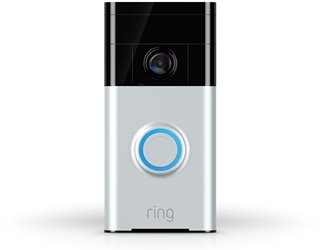
For example, the Ring doorbell camera security system allows users to see, hear, and speak to visitors at their door via a computer, tablet, or mobile phone.

2. Activity Trackers

Sensor devices are designed to be worn during the day to monitor and transmit key health indicators in real time, such as fatigue, appetite, physical movement, oxygen levels, blood pressure, fall detection, and compliance with taking medicine.

At-home health monitoring reduces the number of emergency doctor or hospital visits and helps the elderly or people with disabilities to live more independent lives.

3. Digital Twins


In the manufacturing world, a digital twin is essentially an identical digital copy of a physical object. Using technologies including IoT, artificial intelligence, and machine learning, the digital twin can update itself as the physical object changes in response to its surrounding conditions.

Engineers can use the digital twin instead of the actual physical object to make adjustments or test updates.

4. Self-Healing Machines

Relying on arrays of sensors, artificial intelligence, and machine learning, manufacturing equipment can be designed to recognize variances in its own operation and correct them before they turn into bigger problems.

This saves companies time and money, freeing up employees who would normally monitor equipment and undertake maintenance to work on higher-level tasks.

5. AR Glasses


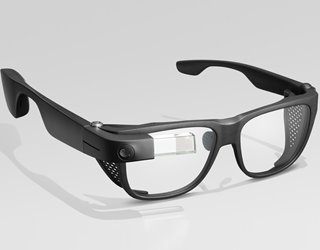
Google Glass is essentially a small, lightweight computer that is worn like a pair of eyeglasses for hands-free work. The information is presented within the “lenses” of the glasses, which can access a variety of Internet applications including Google Maps and Gmail. In industrial settings, workers often use them to pull up blueprints or product specifications.

The latest edition of these smart glasses allows workers to stream clear “point of view” video footage from expert assistants in other locations using Wi-Fi.

6. Ingestible Sensors

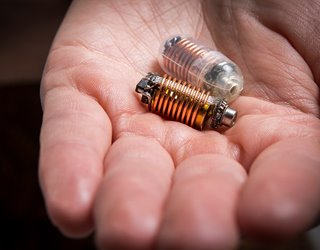
Ingestible electronic devices are roughly the size of a pill and outfitted with a power supply, microprocessor, controller, and sensors. They can be swallowed to monitor disease conditions, detect bleeding, and transmit data from within the gastrointestinal tract, such as the absorption of pharmaceuticals.

The ingestible gas-sensing capsule was developed by researchers at RMIT University in Melbourne, Australia. Photo: RMIT University, Peter Clarke

Abilify MyCite was the first pill with a digital tracking system approved by the U.S. Food and Drug Administration.

7. Smart Farming

Farming can be a very high-tech endeavor these days. An increasing number of farmers are using IoT-enabled tools to monitor weather, soil composition and moisture levels, crop health and growth, and livestock activity.

Drones can also be used to collect photos and atmospheric data, and this combination of data can be analyzed to determine the best time to harvest plants and create fertilizer profiles and schedules.

8. Smart Contact Lenses

Considerable research is being done on developing smart contact lenses that can collect health information or treat specific eye conditions.

For example, the Swiss company Sensimed has developed a noninvasive smart contact lens called Triggerfish with a sensor embedded in a silicone contact lens that detects tiny fluctuations in an eye’s volume that could indicate glaucoma. The device transmits data wirelessly from the sensor to an adhesive antenna worn around the eye.

9. Industrial Security and Safety

Sensors and cameras can be used to monitor the perimeter of restricted areas and detect trespassers in non-authorized areas. They can also identify and fix small leaks of hazardous chemicals or pressure build-ups before they become serious problems, reducing corrosion and minimizing maintenance costs.

IoT-enabled detection systems are also used to monitor chemical factories, nuclear facilities, and mining operations.

10. Motion Detection

Using sensors to detect motion or vibration in large-scale structures such as buildings, bridges, and dams can help identify small disturbances and patterns that could lead to catastrophic failures.

Networks of detectors are also used in areas susceptible to landslides, avalanches, and earthquakes to support early warning systems.


Visit our Website:

Abstract Submission: https://x-i.me/sacon

Conference Reg: https://x-i.me/sareg1

Award Nomination: https://x-i.me/iotnom

Award Reg: https://x-i.me/sares2

Member Nomination: https://x-i.me/iotmem


#internet#technology#automation#cloudcomputing#edgecomputing#protocals#dishwasher#5gNetworks#4gNetwork#technology conferences#


Monday, 5 December 2022

International Research Awards on Internet of Things and Applications


                            INTERNET OF THINGS AND APPLICATIONS


At a time when demand for medical services is steadily on the rise, resources are limited and the need to rein in costs at its highest; the Internet of Things (IoT) holds the promise of a panacea in the healthcare sector increasing its reach, efficiency, interoperability, accuracy, and value. IoT has the potential to disruptively transform the healthcare industry by reimagining how human beings and devices interact to deliver fast and reliable healthcare solutions. Wirelessly connected wearable and implantable devices like fitness bands, blood pressure and heart rate monitors, and glucometers to remote monitoring and even surgery of patients across continents–the IoT has made a lot of it a reality.

The pace of the medical electronic market has grown exponentially over the last few years and is expected to rise to 6.90% by 2030. However, it is important to note that none of this would have been possible without the power of connectivity.

All of these advancements are dependent on network connectivity and speed. Uninterrupted connectivity forms the backbone of IoT in healthcare and 5G forms the elixir for this backbone.

This 5th-generation telecommunication technology, when fully implemented, is poised to be the biggest transformation in mobile technology than any previous generational shift. Its envisaged speed, capacity, promise of reduced power consumption and zero latency, will make possible an incredible range of innovative new products and services.

Early tests have indicated that 5G networks will be as much as 100 times faster than today’s mobile technology. For the healthcare sector, in particular, 5G has the potential to act as a boon as it can connect an entire network of devices with its smaller, more densely-deployed, antennae. With bandwidths measuring in gigabits the Internet of Things (IoT) will finally be able to deploy its truly disruptive applications, ones that have users salivating. Today’s IoT offerings are often forced to be simple, and sometimes even bordering on gimmicky. But a fully connected residence of the future holds promises of sensors that monitor, and devices that assist– everything from mobility to medication will allow people to live healthier and more comfortable lives in their homes for longer.

Symbiotic robots, 3D-printed prosthetics, mood monitors, and tele-health services, will all be included in smart homes of the future. But it will be 5G speed, reliability, energy efficiency and low latency that will allow them to function seamlessly. Here’s a look at some benefits 5G-powered IoT will potentially bring for the healthcare industry:

1. Increased use of wearable devices: As the demand for health wearables increases so does the need to keep these devices connected to cloud-based software. This cloud architecture enables the collection, analysis, and transmission of health data in real time. These wearables are aimed to improve the monitoring of patients covering everything from basic fitness to chronic health conditions. In recent years, there has also been an increased demand for implants–from pacemakers, to neurostimulators and infusion pumps–especially amongst senior patients. All these devices work smoothly when connected to uninterrupted smartphones and hospital trackers so that front-line responders are alerted in case of any emergency.

2. Better remote healthcare: 5G has potential to open new horizons for telehealth and remote patient monitoring to happen at scale through the promise of speed, greater reliability and security of the service. These improvements will allow patients in quarantine or based in remote locations to get unfettered monitoring by healthcare providers. With 5G approaching transmission speeds of 15 to 20 Gbps, this will ensure better real-time videos or live chats. It will also be possible to reduce in-clinic visitations, thereby reducing queues and lower the chances of contracting infections.

3. 24/7 monitoring and faster diagnosis: The 5G network enabled-IoT will allow for round-the-clock patient monitoring. This will help alert healthcare practitioners of impending episodes–that range from low blood sugar, increased risks of heart attacks, or other vitals signs–that may need closer intervention. Constant monitoring will help in providing the right insights, make more precise diagnosis faster and thereby allow for more customized responses .

4. Easier, quicker transfer of data: Medical records of one patient may run into hundreds of gigabytes, and transferring these files to different locations seems to pose a big challenge currently. With instant transferring, capacity 5G promises to clear up the congestion that the medical field usually faces. Also with more devices being connected across spectrums, large data files will move swiftly ensuring that patients get access to the best advice promptly.


Visit our Website:

Abstract Submission: https://x-i.me/sacon

Conference Reg: https://x-i.me/sareg1

Award Nomination: https://x-i.me/iotnom

Award Reg: https://x-i.me/sares2

Member Nomination: https://x-i.me/iotmem

#internet#technology#automation#cloudcomputing#edgecomputing#protocals#dishwasher#5gNetworks#4gNetwork#technology conferences#

Friday, 2 December 2022

International Research Awards on Internet of Things and Applications

                                          INTERNET OF THINGS AND APPLICATIONS


Long-Term Evolution (LTE) Internet of Things (IoT) Market Global, especially in North America, Europe and Asia-Pacific, South America, Middle East and Africa. This report categorizes the market based on manufacturers, regions, type and application. More and more people are eager for fashion, which also promotes the consumption of fashion. The dynamics of the apparel industry are changing dramatically.


Global “Long-Term Evolution (LTE) Internet of Things (IoT) Market” (2023-2028) research report gives complete understandings of various growth opportunities and segmentation of the global Long-Term Evolution (LTE) Internet of Things (IoT) market based on types, applications, end-users, and geography. 


The report establishes a solid foundation for the users who wish to enter into the global market in terms of drivers, restraints, opportunities, trends, and competitive landscape. The report also expands on complete details regarding the supply and demand analysis, participation by major industry players, and market share growth statistics of the business sphere.


Complete estimation of sales margin, price, revenue share, and gross margin is explained.

Global Long-Term Evolution (LTE) Internet of Things (IoT) Market Report 2023 is spread across and provides exclusive vital statistics, data, information, trends and competitive landscape details in this niche sector.


Narrowband IoT (NB-IoT) is a Low Power Wide Area Network (LPWAN) radio technology standard developed by 3GPP to enable a wide range of cellular devices and services. NB-IoT uses a subset of the LTE standard, but limits the bandwidth to a single narrow-band of 200kHz.


Visit:

Abstract Submission: https://x-i.me/sacon

Conference Reg: https://x-i.me/sareg1

Award Nomination: https://x-i.me/iotnom

Award Reg: https://x-i.me/sares2

Member Nomination: https://x-i.me/iotmem

#internet#technology#automation#cloudcomputing#edgecomputing#protocals#dishwasher#5gNetworks#4gNetwork#technology conferences#


A Milestone for securing the Internet of Things: Infineon welcomes introduction of a voluntary U.S. IoT security label.

  Today, U.S. Deputy National Security Advisor Anne Neuberger, Chairwoman of the Federal Communications Commission (FCC) Jessica Rosenworcel...